Category Archives: diversity

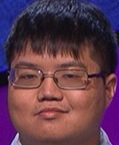
“Jeopardy” champ continues roll: Arthur Chu’s generational vulnerability as he approaches $300,000 (Tuesday update)

After a week off, Arthur Chu’s “Jeopardy” run continued this week.

Monday’s  show put him at nearly $280,000. (More on Tuesday’s show below).

I’d like to think the racism toward him has died down, but I’m sure there’s still some resentment out there.

But it’s likely less about Chu’s race or his aggressive style of play, and more due to outright jealousy.

The guy has pulled in more than a quarter mill and makes “Jeopardy” more interesting than it deserves to be.

What surprised me this week, however, is that Arthur is not nearly as formidable as one might think.

In the first round Monday , he was aggressive right away, starting with “Potent Potables” for $1000. But then he missed the clue “Black Bush” and couldn’t come up with “What is Bushmills?”

Maybe he’ll have a shot on St.Patrick’s Day. Or maybe he just likes Cleveland craft beer?

Then there was the Faulkner answer in a literary category, “1929 title…”

And he came up with “What is Franny and Zooey”?  How do you mix up J.D. Salinger and William Faulkner?

Arthur has some weak spots. But never mind. The technique of playing the high ticket answers first does two things. If you answer them right, you build a big lead while your opponents become even more nervous than normal. If you don’t answer and no one else does, you take the biggest threats off the board. 

He’s not cheating. He’s just adding a level of strategy that makes the game more interesting.

You still have to get the answers right. And when he does, Arthur builds almost an insurmountable lead as he did on Monday. By the start of Double Jeopardy, Arthur was at $6,000 to his opponents $200 and minus $200.

The game was virtually over.

By Final Jeopardy, his lead was $18,200 to his oponents’  $200 and  $7,800.

The only way to lose was by betting wrong. (You double your closest opponent, assuming he’s smart enough to double up in FJ, and come up with $15,600).

That means Arthur only needed to bet anything up to $2,600 to finish ahead of his closest opponent.

Even if Arthur didn’t know the answer, he’d still win.

And that’s what happened. He didn’t know the correct question to the Broadway composer answer, picking Alan Menken and not Stephen Sondheim (showing his obvious generational weakness).

But it didn’t matter. He bet a conservative $2,000 and still finished with $16,200– well ahead of his nearest opponent.

I haven’t watched “Jeopardy” in ages. But now that Arthur’s made me watch it,  I appreciate it a lot more.

I still don’t get the racism people have displayed toward him. Arthur actually makes the game less boring. In fact, Arthur’s style could be a losing strategy if you don’t get the answers right. That’s the real risk. The key is not to  guess.  If you’re wrong and put yourself in a hole, you can’t easily get back in the black without a big run among the easier answers.

But if you do know the answers, and land a Daily Double, you can sprint ahead of your opponents  and go wire-to-wire.

Still, you have to get the answers right.

I hope Arthur wins. I like to see an Asian American with bangs go on “Jeopardy” and talk about things like how he’s  promised his mother he will take care of her the rest of her life. That’s good old Asian American family values for you.

So much for the “Jeopardy” villain. There’s not a ruthless bone in this kid’s body.

But he’s shown some vulnerability on some of these “generational” questions.

He has a good chance to continue his “Jeopardy” buzz saw. He just  needs to avoid his weak topics and smarter, older players.

Let’s see if he gets to $300,000 tonight.

UPDATE: 11:43 p.m. PDT — Just saw the replay  of Tuesday’s show and was surprised that the Chu-train stumbled a bit early. On the very first question he aggressively went with the “Reddit-Ask Me Anything”  category for $1,000 and then couldn’t convert the Mookie clue into “Who is Spike Lee?”  Into the first break, the champ was trailing with $1,200 to his opponents’ $2,600 and $1,800. He didn’t know much about walrus teeth either and sunk to a low of  $200 vs. his opponents at $3,000 and $1,600. But his strategy begets volatility, and sure enough in no time he got a question right on Pringles, Dublin, and the Black Forest to get him back to $2,000. A Daily Double on Best Sellers got him the clue “1972 Diet Revolution…” Who is Dr. Atkins, of course. That got him to $4,000 and the champ was back on track. Double Jeopardy saw two incidents worth comment. One a mispronounce of actress Frances McDormand. Arthur said “McDiarmand.” It was Arthur’s “travoltifying” moment (See “Adele Dazeem.”) But it didn’t hurt him. Arthur was already at $14,400, more than double his closest rival. Another speed bump occurred on the question “In 1814, this VP from Mass. for whom a political term is named died in office having served less than 2 years.”  “Who is Gerry,”  said Arthur, with a soft G, because of the term “gerrymandering.” But host and arbiter Alex T. said it was Elbridge Gerry with a hard G. (BTW, Old Elb was Harvard, ’62…as in 1762). Once again, it didn’t hurt Arthur who was so far ahead, the game was over. Into Final J., the game recycled a subject from the previous day, with a clue on a 1951 novel about a hero who rescues children falling from a cliff. Good thing Arthur, who confused Faulkner and Salinger on a previous show, got it right this time. Catcher in the Rye. Arthur bet just enough to hit $20,000 giving him an 11 day total of $297,200. Once again his style helps him to overcome some wrong answers early in topics where he’s shaky. But the champ is showing some weakness. In some ways, these lesser conventional contestants play right into Arthur’s game plan. Playing the big numbers first helps him. And it’s kind of fun to see his score bounce all around the board. But If he ever catches another smart, aggressive player in a volatile matchup, now that would be a thrilling show.

CHECK OUT THE NEW HOME FOR THE AMOK COLUMN: www.aaldef.org/blog

LIKE  and FOLLOW us on Facebook: http://www.facebook.com/emilguillermo.media

And FOLLOW  on  Twitter     http://www.twitter.com/emilamok


Oscars 2014: A turning point for diversity in the industry?

Like Hostess Ellen said, either “12 Years a slave” wins or we’re all racists. 

Good thing it won. But I don’t know if we’ve really turned a corner on diversity.  Under-representation and stereotypes still exist in Hollywood.  Asians are few and far between, and Native Americans?  In these times, Johnny Depp can still play Tonto.

But my goodness, the list of winners in the top categories this year is still  impressive:

Asian American of Filipino descent: Robert Lopez, composer, Best Original Song, “Let it Go,” from “Frozen.”

Mexican American: Alfonso Cuaron, “Gravity.”

African American: John Ridley, Best Screenplay adaption, “12 Years a Slave.”

Mexican Kenyan: Lupita Nyong’o, Best Supporting Actress, “12 Years a Slave.”

Brit director Steve McQueen’s brutally honest telling of the Solomon Northup story is so disturbing, it’s hard to take.

But it needed to be told finally. Doesn’t put closure on the race issue by a long-shot. Don’t talk about post-racial America after a “Best Picture” Oscar.

But I think the industry is beginning to change as far as recognizing diverse audiences.

You can’t deny the winner’s list tonight.

I pretty much predicted how it would go.

“Gravity” was such a technical marvel, but didn’t quite get out of the planetarium for me.

I loved Amy Adams but knew she wouldn’t win. “American Hustle” was good but ABSCAM isn’t Watergate.  And for New Jersey folks, it’s not even Bridgegate.

So Cate Blanchett wins as she has most of the pre-shows.

Same with Jared Leto and Matthew McConaughey in the  male actor categories.

Both of them gave great speeches.

I thought Leto’s mention of Ukraine and Venezuela, and AIDS victims brought things a little closer to reality. And McConaughey’s mention of God, was “all right, all right.”

But given the diversity wins of the night, Oscar folks still like things more  tactful than I would have wanted.

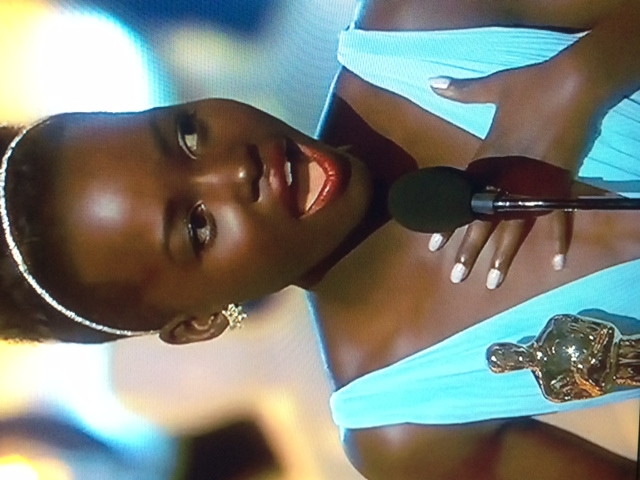
Never mind, Lupita Nyong’o’s acceptance speech struck the right chord. She recognized that her success was based on the pain of the past.(A show of humility there). And then after thanking colleagues, she chose to inspire:

“When I look down at this golden statue, may it remind me and every little child that no matter where you’re from, your dreams are valid. Thank you.”

This was not a night or the time to beat anyone over the head apparently. Not with Ellen playing silly, ordering pizzas and doing selfies.  It was a fun, guilt free Oscars.

And the winners were among the most I can ever remember.

Leave it to Lupita Nyong’o  to help validate the night.


CHECK OUT THE NEW HOME FOR THE AMOK COLUMN: www.aaldef.org/blog

LIKE  and FOLLOW us on Facebook: http://www.facebook.com/emilguillermo.media

And FOLLOW  on  Twitter     http://www.twitter.com/emilamok


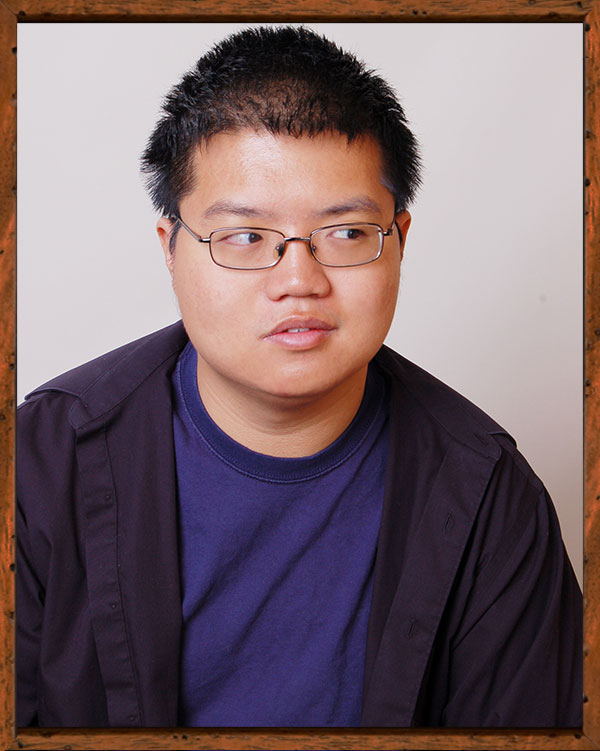
PODCAST–PART 2: Arthur Chu,”Jeopardy” Champ, Talks About Race, Being Asian American, & Racist Tweets (second installment)

This is Part 2 of my conversation with Arthur Chu, the Asian American who has amassed more than $235,000 in two-weeks on “Jeopardy.”

But it’s also made him the target of racist and intimidating tweets and comments on the internet. He talks about what it’s like to be a racial minority, and how despite opportunities and success, there’s always a feeling of a  compromised sense of belonging. He hasn’t forgotten what his father told him as a young boy growing up Asian American.

But he also has chosen to be very open and  confront any racism he perceives head on.

[powerpress]http://www.amok.com/wp-content/uploads/2014/02/Arthur-ChuJeopardyChamp-Talks-About-Race-The-Game-Racist-Tweets-Part-2.m4a[/powerpress]


Arthur Chu,"Jeopardy"Champ, Talks About Race, The Game, & Racist Tweets, Part 2

CHECK OUT THE NEW HOME FOR THE AMOK COLUMN: www.aaldef.org/blog

LIKE  and FOLLOW us on Facebook: http://www.facebook.com/emilguillermo.media

And FOLLOW  on  Twitter     http://www.twitter.com/emilamok


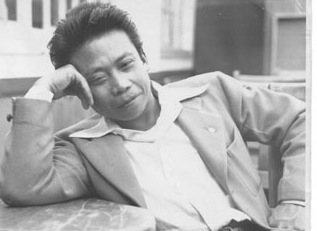
Emil Guillermo’s Amok: Ricardo Alvarado’s Eyes–Celebrating San Francisco’s Centennial Manongs

When I first met Janet Alvarado in the mid-80s, she was just like me—a young American-born Filipino.

Only she had a box of photographs and a dream.

The photographs were taken by her dad, Ricardo Alvarado. The dream was to share his vision.

Almost 30 years later,  it’s all come true.

The Alvarado Project, as it’s called, has been honored by the Smithsonian, toured around the country, and is about to grow in scope with another chapter–this time honoring Alvarado’s wife Norberta and her beloved Leyte.

But first things first, Ricardo Alvarado would have been 100 on February 7.

It’s only fitting to close the first chapter by honoring Ricardo Alvarado’s centennial year.

I admit when I first saw his photographs, I didn’t grasp how special they were. Why would they be? They were shots of neighborhoods that Filipinos lived in. Images of the parties Filipino families attended. They looked like my life in San Francisco in the 1950s, ‘60s, and ‘70s. My American Filipino life.

Silly me.

That’s what gives them their power. The photographs recall the specialness of life that few regarded as special back then.

It was just us.

Who was looking at American Filipino life like it mattered back then? Before Asian American studies, or ethnic studies? Before there was a sense of pride within the American community?

Not many.

Ricardo Alvarado was in that first wave of immigrants to San Francisco. He came to America looking for opportunity in 1928. But instead, he found that people wanted to shut the door almost as soon as he arrived. It was the depression. The height of racism and violence toward Filipinos came in 1930. In San Francisco, we were called “monkey.”

No one thought the community was particularly photogenic back then.

Typical of many Filipinos, Ricardo Alvarado endured and was able to join the Army. After WWII, he returned to marry a Filipina, start a family and buy a home in San Francisco on the GI Bill.

And the community blossomed.

The family and the community became the subjects of Ricardo’s  lifelong love affair with photography.

More than the snapshots and the lineups most people took with the Brownie and  Instamatic,Alvarado was armed with a view camera,  documenting and preserving the look of American Filipino life.

As his daughter  realized, the images weren’t  just for people to gaze at then.

More meaningfully, the photography was the bridge from their present to the future, so that others could wonder what it was like” back then. “ 

And at their best, they represented the most artful photographs of the early American Filipino community in San Francisco, if not the entire U.S.

So while you may have placed your photos in deep storage, or heaven forbid, thrown them out as basura, Janet Alvarado knew she had something more than sentimental memories.

These were lasting images of the community.

That others didn’t keep even the basic shots of everyday, make Ricardo Alvarado’s photographs even more special.

That’s the value of the Alvarado Project.  We call it diaspora now, but then, the global Filipino was a few neighborhoods in San Francisco, and other places in California. How did we live? No one thought we were special enough to preserve and document on film, let alone study like some lost tribe in the Filipinos.

We were more like a new colony in America.

After surviving the 1920s, ‘30s, and the War, American Filipinos were  just happy to be alive.

Ricardo Alvarado knew that was photogenic.

MY DAD, WILLIE GUILLERMO AND THE SOUTH OF MARKET

When we gather in the South of Market on the 15th to celebrate Ricardo Alvarado,  Janet Alvarado has been gracious enough to allow me to mention my father, the late Willie Guillermo, already a member of the Centennial Club.

Though Filipinos lived all over the city, in the Western Addition, Fillmore, and BayView, most began their journey in the South of Market.

My family started on Kissling Street by St. Josephs, then moved to the Western Addition on Fulton St. My Uncle Joe was in the Fillmore on McAllister, under the appliance store light that would blink “HOTPOINT.” It was the hot spot for our family.

But Sixth Street was for fun. And that’s where my Dad would often return to hang-out with the other Filipinos of his generation who saw in Sixth Street as a the playground for Ma Jong, cards, dancing.

My dad would take me to the barber college for the cheap haircuts.

This month, my dad would have been 108.

That’s the irony. I thought my dad was 108 when he was alive.

Like Ricardo Alvarado, my dad came to America in the 1920s but was much older. He didn’t go to war and missed out on the GI Bill. But he didn’t miss out when more Filipinas were able to come to America after the war.

Until then, there weren’t many Filipinas to marry. And because of anti-intermarriage laws, Filipinos were essentially a bachelor society. Roving packs of bachelors.

It meant that when more were able to find wives, and start families later in life, there would be a lot of older dads.

I had one of them.  And I admit that as a kid I was ashamed, not of his being Filipino. It was his being old. He was grandfather and father all rolled into one. And he took me to that damn barber college for the cheap haircuts.

Today, Dad as a perennial 108-year-old makes sense.

And as I approach 108 myself, I am far more sympathetic.

It was history that helped me understand, and photographs that helped me recall–not just where we came from, but what we had overcome.

It is said that the offspring of the immigrants were the “bridge” generation. To what? To American life.

Maybe, but the bridges that have the lasting connections between the ancestral home and the present were formed by our fathers, the Manongs like my dad and Ricardo Alvarado.

On the 15th, we’ll honor them, members of the Centennial Club.


INFORMATION:

Date: Saturday, February 15, 2014 The Centennial Celebration

Time: 2 pm to 5 pm

Place: BAYAHIHAN COMMUNITY CENTER, 1010 Mission Street (near 6th Street), San Francisco, CA

Parking lot on 6th & Mission Street next to Bayanihan Center or at 5th & Mission Garage

Join us in a community salute to the San Francisco pioneering generation and communities. Remarks and discussion from invited guests celebrating Alvarado’s photographs in a nod back to “Through My Father’s Eyes”.